20 April 2010

Ampair announces investment from Sigma

Ampair Energy Limited is pleased to announce that the Sigma Sustainable Energy Fund II has committed £1.5m to Ampair Energy Limited (“Ampair”).

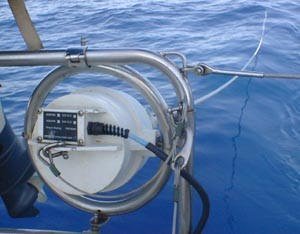
Ampair is a new company based in Dorset, which recently acquired the business and assets of Boost Energy Systems Limited, a company that designs and produces wind turbines, currently ranging from 100W to 6kW. Ampair wind turbines have been manufactured in the UK since 1973 and the latest model, the Ampair 6000, is a 6kW device which has been designed for worldwide use in grid-tied applications, commercial off-grid applications and rural electrification. Customers who have bought Ampair turbines include Shell, Cable and Wireless and Scottish and Southern Energy, who have purchased two of the first batch of Ampair 6000 turbines to be produced.

Sigma Capital Group plc, the managers of Sigma Sustainable Energy Fund II, are a specialist asset management and advisory group focused on venture capital, property and the commercialisation of university IP.

The investment will be used to support further development of the Ampair range and the expansion of the company’s existing commercial activities.

Patrick Graham, a Director on Sigma’s investment team, said, “Having looked at a number of compelling opportunities in the small wind sector we were drawn to Ampair due to the fact that the overall performance of the Ampair 6000 is comparable to that of the top manufacturers in the industry but it comes at a lower price point, and hence a lower cost per kWh, making it potentially the most economic small wind turbine on the market. It was also important to us that the Ampair 6000 has been specifically designed as a platform technology that can be used to produce larger turbines at minimal additional cost, thereby further reducing the cost per kWh.”

David Sharman, CEO of Ampair, said, “We are delighted to have Sigma on board as our lead investor, they are clearly committed to the sector and were very supportive throughout the process. We look forward to working together with Sigma as we build Ampair into the world leader in small wind turbines.”

Labels: , ,

27 June 2009

MREA small wind conference

Last week I was lucky enough to go to Wisconsin to the MREA Small Wind Conference. This was two days of fun ! Luckily the weather was nice when I eventually arrived, after a night in Philadelphia because of extremely bad weather which delayed the connecting flight. Almost everybody there was a small wind professional and there were lots of side meetings going on. Well worth it for anyone in the Americas who is into small wind. The micro wind side of things is pretty much frowned upon though.

I crammed three presentations into two slots which may be of interest. The first is a pretty standard Ampair commercial.

Ampair%20for%20MREA%20conference%2C%20rev%202%20%28June%202009%29.pdf

Then I delivered two presentations on some of the UK trials. One is from the Warwick Wind Trials which were run by Encraft. The other is from the Energy Savings Trust trial and is all they wanted to release prior to the full trial report coming out sometime soon. Both were with kind permission of the relevant trial management.

Encraft%20-%20DS%20for%20MREA%2C%20June%2009.ppt.pdf

EST%20Field%20Trial%20-%20Presentation_D%20Sharman.pdf

In the WWT slideset one slide is repeated twice. I'd meant to put up a slide with turbine failures on it and photos of dead Ampairs, Swifts, and a Windsave. Maybe it was just as well it didn't make it in.

There wasn't a single boring presentation there. One evening Bergey sponsored a load of beer out at the MREA site where they were preparing for the annual MREA Fair which was very welcome and they were the most popular model. Proven seem to have a very good following in the area, ARE seem to be up and coming, and Southwest were well represented as ever. There were about a dozen other manufacturers and a couple of hundred small wind installers and such like.

Labels: , ,

07 March 2009

Delta / Zeeland trial - results update March 2009

The latest results have come in from the Delta / Zeeland trial of small wind turbines in the Netherlands. They do not normally release public results at one month intervals so I expect it is because they want to announce some news.

Their email gives the following information:

1. The Renewable Device Swift turbine was removed on 31 January 2009 and will be replaced by a Raum 1.3.

2. The Raum 1.3 turbine has been installed but the inverter has not been installed yet. Installation is expected to be completed in mid April 2009.

3. The Turby has had a fault during all of February 2009.

Looking at the data it seems to support all the trends that were in place, i.e.:

- The vertical axis turbines are the worse performers.

- The Ampair, Fortis, and SWW Skystream are the best performers.

- The Zephyr AirDolphin is technically a good performer but commercially so expensive it is not commercially attractive. In fairness to Ampair I should point out that our installer has put an price on the Ampair that is unusually high so we too are labouring under an heavy economic burden.

The strongest wind month was January with an annual average of 4.4m/s. Some people are commenting that winds on this site are unusually low but I disagree as they are in fact typical of the 12m height wind speeds at most rural locations where substantial communities live. It is extremely unusual to find large groups of people living in winds of higher than this and recent work in the UK tends to support our observations (see the Warwick Wind Trials and the EST microwind trials).

Other comments I have heard are that there is wind shadowing occurring between turbines. There may be some truth in this as the turbines are on a line SSE-NNW and the average wind has come from almost dead S. So anyone is immediately downstream of the Skystream (the most efficient wind harvester and with a large diameter) coulfd reasonably raise this as an issue. There is obviously scope here for a quick undergraduate project to explore this issue further. I don't actually know the sequence of turbines in the line.

The results can be downloaded here:

.Zeeland%20small%20wind%20turbine%20testfield%20%2812m+%29.pdf

As always those manufacturers who have had the courage to participate are to be commended. Doing stuff like this in public is difficult for small companies. Also the Delta / Zeeland trial organisers are doing a good job and showing that pretty basic but independent trials can yield very informative results for consumers.

Labels: , , , , , , , , , , ,

05 February 2009

Delta / Zeeland trial - results update February 2009

The Delta / Zeeland small wind turbine wind trial has released another set of results so that the data now covers a ten month period through until the end of January 2009. This is a trial of eleven turbines in a row in a relatively coastal area of the Netherlands.

The previous results covered the first six months and were discussed here, here, and here.

Since then I believe that RD Swift and Ropatec have made some changes to their turbines. The smaller Ropatec (the 3kW) is now performing better but the larger (the 6kW) seems unchanged. The RD Swift does not appear to have a different performance.

The better performers continue to be Southwest, Fortis, and Ampair. The Zephyr AirDolphin also does well but is very expensive.

The results can be downloaded here.Zeeland%20small%20wind%20turbine%20testfield%20%2812m%29.pdf

Labels: , , , , , , , , ,

09 November 2008

Northanger visiting Antarctic peninsular


These two photos were just sent by Roger Robinson who was on Northanger about 5-years ago and visited the Antarctic peninsular. He apologises for the quality as these are scans from slides. They look fine to me.

I should point out that Northanger run or support various 'commercial' expeditions - just look at the Northanger website for more info. Having organised and been on both commercial and non-commercial expeditions I'm not always sure of the difference. Style surely is the real issue and we like the Northanger style going right back to the Smith Island ascent of Greg Landreth back in 1995. The chap who told me the tale of this was on the second Joint Services expedition to the island and he was impressed.

Labels: ,

24 October 2008

Delta wind trial in Netherlands; BWEA conference

During the week we exhibited at the BWEA conference and exhibition and in one of the little seminar sessions I gave the usual update on Ampair etc plus I summarised the results that have just come in from the first 6 months of the Delta wind trial in Zeeland in the Netherlands, managed by Zeeuwind.

Ampair - BWEA seminar presentation c/w Delta / Zeeland windtest results: dowload pdf file from this link:

Ampair%20for%20BWEA%20conference%20%28October%202008%29.pdf

Refer to the pdf file which can be downloaded. The first five slides are just an Ampair commercial from the seminar presentation I gave.

-----------------------

Ampair has been participating in the Delta wind trial in the Netherlands of small grid connected wind turbines. The first report has just been released with 6-months of data and the results are very interesting because they show clearly the state of the art in commercial small wind turbines (with Ampair as one of the leaders), and because they show the performance of several vertical axis designs.

The trial is running slightly late – this is a common feature of all such trials because in practice many products are not as available as press releases would have us believe. The trial is a collective effort of some consumer testing organisations (the equivalent of Which in the UK) and some utilities, and some provincial governments. It is taking place in the Zeeland area of southwest Holland.

Originally twelve turbines were pencilled in for the trial. Not all arrived as scheduled and so one of our Dutch distributors Eco-Energie Rietpol put forwards the Ampair 600 to fill a vacancy. The 11 turbines which did participate are summarised in slide 6. Sincere congratulations to everybody who participated for having the courage to do so – it is easy to snipe at the results but I can assure you that the participants all deserve our support. As always the people who avoid participation in these sorts of serious trials are the ones who may merit negative comment, and not those who genuinely participate and then have some public disappointment.

Eco-Energie Rietpol installed the Ampair 600 early in the year, and not long afterwards it was shut down because we needed to upgrade the blades, tail, and electronic safety circuits. The trial started whilst the Ampair was shut down and so you will notice that the first seven weeks of production data for the Ampair are essentially zero.

Each week the organisers release information to the installers about performance of their turbines but not of all the others. Last week the organisers released the summary data for the first six months of the eleven turbines that did arrive. They have given monthly production data and total consumption data. In my version which is slide 7 I have added in a row showing the net power output, i.e. production minus consumption. I have translated from the Dutch and any mistakes are my fault, sorry.

On slide 8 I have graphed the results to display installed versus net power output.

This trial includes four vertical wind turbines, two from Ropatec and one each from Turby and Windwalker. This seems to be the first time that so many VAWTs have been represented in a trial side by side with several different HAWTs and so the results would be fascinating for that reason alone.

The only two turbines in the trial which are directly comparable are the Ampair 600 and the Zephyr AirDolphin. The Zephyr is 1.8m diameter and the Ampair is 1.7m diameter but basically they are both 3-bladed upwind HAWTs. Again this is fascinating because it gives us all an opportunity to compare results from two serious manufacturers of good standing. As an industry there is a lot of consideration being given to conducting so-called round-robin tests where one turbine moves from test site to test site to compare the abilities of test organisations to reproduce each others figures. It seems quite likely that the Ampair 600 and the Zephyr Airdolphin will be used for this as they are small enough and cheap enough, yet also stable enough to survive and produce statistically meaningful results. So looking at them side-by-side is interesting.

Slide 8 is the most interesting slide. The most obvious thing is the shaded zone running crudely Ampair 600 – Fortis Passaat - Southwest Skystream – Fortis Montana. These four turbines are closest to the ideal of more power for less money and so they appear to represent the efficient frontier of the current state of the art in modern small wind turbine manufacture. All are HAWTS from manufacturers with credible histories, even if only one of them has had huge (relatively) amounts of cash to put in to product R&D.

Looking at the rest the most obvious conclusion is that there is no correlation between money invested in R&D and product performance. With one exception all of the rest are simply poor performers in terms of closeness to the efficient frontier. This does not mean that they are necessarily not worth further consideration but it does mean that from an investment perspective (whether society, shareholder, client) one should think very carefully before heading in that direction as for whatever reason they are simply expensive. I know that Ampair and Fortis are cash-poor (i.e. without VC investment to date) and we are demonstrating that we can perform and that in my opinion is the standard we should all be assessed against.

All the VAWTs are bad performers. One is so bad that it does not even make it onto the graph. In fact I am not sure it was at the test site as the Windwalker appears to have consumed 39 kWh and produced nothing. It may be that it has not been installed and the meter is reading incorrectly. I note that no price is given and so I have chosen not to graph it. The other three VAWTs do at least appear to produce but their cost/benefit is noticeably poorer than any of the HAWTs. This is in supposedly relatively clean airflow and they will argue that as the airflow becomes more turbulent they will become relatively better performers. In fact many VAWT manufacturers are claiming that they are best suited to low velocity turbulent urban airflows, but so far no good comparative data set has existed to support this claim. From the Zeeland data the best one can do is to point out that maybe the VAWTs will be better but they’ve got a large handicap to overcome.

I know the Ropatec people had some confusions in the first two months as they visited me at the BWEA conference in London. If I understood their explanation their installer put the 3kW inverter on the 6kW machine and vice versa. Towards they end of the first two months they corrected this mistake. There is some confusion as to whether the inverters have been correctly reprogrammed now. Good luck to them in the next six months. It is fascinating to observe that the Tesco supermarket chain has installed thirty plus of the 6kW Ropatec units at over £35k each in the UK as, on the basis of this data a couple of Ampair 600 or one small Fortis Passaat would have been better, and in the case of Ampair would have had the benefit of buying British.

This Turby is producing. In previous tests of the Turby this has not always been the case – note that the Turby is a serious power consumer. The Turby is spun up to speed by using the generator as a motor. It appears that whatever Turby are doing to improve their spin up algorithm is working, or that the winds are sufficiently steady on this site. But a 10:6 ratio of production : consumption does not leave much margin for error. In this respect the Ropatec layout is a clear winner in the VAWT stakes.

The Renewable Devices Swift is another non-performer. It simply is not producing. It has a 2.1m diameter and so has twice the swept area of the Zephyr Airdolphin and the Ampair 600 and so should produce approximately twice the energy. Instead it is producing less than half. Clearly their electronics design is not ideal as it is a serious power consumer, but even if we just look at power output in any given month it is producing half of the Ampair and the Zephyr. This is before one looks at the additional handicap of the huge cost of the product. Their latest claim is that they have orders for 3,000 machines and that they are silent. Well they may be silent but they also do not appear to produce power. They have not participated in any public trials before so it is not possible to comment as to whether this is an unusual result. One benefit of being a repeat participant in trials as that one can be given a bit of slack if something goes wrong in any one trial.

The Energy Ball deserves an especial good mention. The Energy Ball is one of two similar products on the market with the other being the 2kW Loopwing from Japan. Apparently Scottish & Southern Energy have just bought two Loopwings to install in the UK in Weymouth at a cost of £30-£40k or so we were told at a BWEA meeting which set us all (it was a manufacturers meeting) back on our heels with much collective gnashing of teeth. This makes the EUR 4k Energy Ball an extremely cost-effective proposition as it is the only product that is below the efficient frontier. Because of this I am not considering (for now) that the price is a true reflection of the actual commercial installed cost. I may be wrong and I will be happy to correct myself as it is a truly good result and I look forward to learning more about a design I had hitherto disregarded.

Now we get to the four machines that seem to form the efficient frontier. The Fortis units are doing exactly what I expect them to do – dependable performers that are good in low winds and not quite harvesting to the maximum in high winds. To understand this point compare April and May production for the Fortis units with that of the Zephy AirDolphin, and also look at the monthly windspeed table on the lower left of slide 7. See how the Apr/May winds obviously came through as high wind pulses contain a greater fraction of energy and how the Zephyr could more than double its performance whereas the Fortis units were held to 1-1/2 or so. This suggests that the Zephyr has over-invested in high-wind performance to the detriment of its low-wind cost-effectiveness. The Fortis designer is very focussed on cost-effectiveness and he would appear to have made a commercially sound compromise here. The Fortis installed prices are perfectly believable.

The Southwest Windpower (SWW) Skystream unit is the third good performer. For many years now Ampair has competed commercially with the SWW designs and we have been under no illusions about their competency in making cost-effective turbines (and the slickest marketing in the industry). We have been warning our bigger brethren to brace themselves and we appear to have been right to do so as the Skystream is very good – even more so if you replot this graph as a swept area graph. There are varying stories about exactly how much US government support the Skystream and SWW have received over and above the venture capital but it is paying off (I hope the UK government realise that this is a hint, but the UK government representative for microgeneration cancelled his talk at the last moment which gives you a feel for things here). I will point out that the Skystream is underpriced in this report and the true installed price is more like EUR 14k. The Belgian distributor has installed this unit and this is because the Dutch one was more expensive – someone has swallowed a chunk of cost here. Once the Skystream is upped to EUR 14k it is exactly on trend with the Fortis products.

It is time to critique the Ampair 600. Firstly our installer has overcosted this one as our boxed set only costs £2850, so an installed price of EUR 89250 is rather eyebrow raising. Reducing this to a more realistic EUR 6000 brings us on-trend, but don’t go beating Eco-Rietpol up for that price as he is well aware that fixed costs are high for small installs and he won't underprice. Secondly the energy output is low versus the Zephyr because we have effectively missed the first two months which are energy rich, because we were shutdown until week 8 whilst we waited on our safety upgrade (but that is our fault so we will take it on the chin). Comparing the next four months one sees that the Zephyr and the Ampair are trading kWh for kWh with each other which is exactly what I would expect as we are both manufacturers with an aero/mech/electrical competence and a power electronics competence and we both basically know what we are doing. In the last month the Zephyr gets slightly ahead again which is again to be expected as this was another energy rich month. I know that the inverter on this Ampair is the SMA 700W whereas the Zephyr tend to use the larger SMA units and so can better harvest the high wind pulses. Conversely however one can see that the Zephyr is a substantial energy consumer whereas the Ampair is a real miser. So I expect Ampair and Zephyr to continue to go head to head with these models for some years to come except that Ampair have a cost (or price) advantage at the momet. Once the Ampair data is corrected it is possible to draw an almost perfect line along the four efficient frontier units.

UPDATE 25 OCT 08

One thing I forgot to mention last night is that this Zeeland trial is supporting the general validity of the AWEA and BWEA small wind standards. In the Ampair 2008 catalogue we have tried to set out the information required in accordance with the BWEA standard - see page 5. One very important piece of information is the Annual Energy Production graph and for the the grid connected Ampair 600-230 this is the lower left hand graph.

At the test site the average windspeed was about 3.5m/s for the first six months. Drawing a vertical line on the AEP graph at 3.5 one can read off an annual production of 440 kWh which means that the Ampair 600 should have produced 220 kWh in the six month period. To compensate for the missing 7 weeks if we add approximately 60 kWh (per the Zephyr) to the measured 82 kWh we get 140 kWh.

This is actually a pretty good prediction (220kWh predicted versus 140 kWh actual) and a lot of the error is probably in the shape factor used to calculate the wind speed distribution. I am guessing from the limited data released so far but the Summer months have probably had a shape factor of 1.2 to 1.6 whereas the AWEA/BWEA standard requires the calculation to be performed with a shape factor of 2.0. I say this from observing the monthly differences, not because I have been crunching the data that the test sends out each week. During the winter months I expect that the shape factor will rise somewhat and hopefully in the next report it will be included. The shape factor is the small wind industry's equivalent of the solar PV industry's mythical 1000W/m2.

Of course the AEP is utterly dependent on the dependability of the power curve data. By now anyone reading should have figured out that this must be a power curve for net useful power to the consumer, and will now see why some folk prefer to give power curves that are somewhat ambiguous in this regard. It makes a lot of difference whether you measure power out of turbine or power into grid. It also makes a lot of difference whether you measure power out, or net power out. Ask your manufacturer !

Whether you trust your manufacturer is a separate issue. I have written previously (see blog for 29 December 2007) about Ampair practice in this regard. Our AEP figures in the 2008 catalogue come from the low tech approach. Now we have several further sets of data for the Ampair 600 which show it as anything from a 'rated' 350W machine to a 700W machine. Some of those numbers are high tech data logged outputs and some are low tech data logged outputs. Until we understand why the differences arise we will not be in a great hurry to commit further commercial suicide by publishing the lowest of these. Please excuse us but we already lose enough sales as it is. Again testing per the AWEA / BWEA standard helps but I see a nasty commercial dilemma coming where some machines test and publish independently certified results, but then go out of business whilst others merrily claim super-hero status and laugh all the way to the bank.

END UPDATE 25 OCT 08

I expect that we will all scurry around frantically improving our designs and carry on into the next round. These wind speeds are absolutely typical of the sort of Summer windspeeds I expect at most urban fringes in reasonable wind locations. After 12-months we will know what the annual average will be.

Now could someone please send me the name of the Tesco highly paid expert consultant and of the people within Tesco who believed him. At least I hope they get their consultancy fee back.

Good luck to all manufacturers who participated. I fully expect that we will all (Ampair included) have lots of very public failures over the next six months, and I look forward to revising my opinions as new facts come to light.

For further info on the trial see:
Zeeuwind
www.zeeuwind.nl

Labels: , , , , , , , , ,

19 August 2008

Sail World recommend Aquair 100


Sail World put out a completely unsolicited article praising the "Aquair" towed generators from Ampair which was spotted by one of our suppliers back in July (I've only just made time to comment in the blog because of some other Aquair things I am posting):

Sail World article on the Aquair 100 from Ampair

I've contacted Nanck Knudsen at Sail World and they are happy that we tell everybody about this. The photos are courtesy B&W media from Sail World. We didn't even know they were doing this which is quite a nice suprise really.

"After 35,000 miles of cruising, with a spare in the hold (just in case), we have never had even a nibble, let alone a bite from a fish on our trailing genny. The brand we use is an AMPAIR, and it puts in 6 amps at 6 knots reliably over a 24 hour period ....... You'll find the product on Ampair's website, and they have world wide distributors.. (http://www.sail-world.com/indexs.cfm?nid=45233)"

Labels: , , , , ,

30 December 2007

Warwick Wind Trial Results (to date 11 Dec 2007)

These comments summarise some of the responses I have written over the last month to people in the microwind and smallwind industry who have been asking about the results of the Warwick Wind Trial, which spill over into a lot of related areas. Fundamentally Ampair supported this trial because we felt it was right to get hard facts into the public about the difficulties with urban grid connected microwind.

The WWT trial has had a difficult two years to get to where it is, namely the world’s first public domain trial of multiple models of grid connected small wind turbines on different sites especially urban sites. Just getting to this point has obviously been a mammoth task for the WWT team given the very limited resources they have had. All credit to them, especially to Mathew Rhodes and David Hailes. But they are now only one third of the way through (turbines up, data coming in) and they have the other two thirds still to come (capture one year of data, analyse data, write up and clean up). At this point they have only got one month of data (for Nov 2007) from all 24 sites (they have longer data runs from some sites) including the following manufacturers and products:

  • Ampair (Ampair 600)
  • Eclectic (Stealthgen D400)
  • Renewable Devices Swift (Swift Mk2)
  • Windsave (WS1000 c/w Plug’n’Save)
  • Zephyr (AirDolphin)

There were going to be FuturEnergy turbines installed but they have failed to deliver as far as I gather. In fact an important learning point from the trial is that originally it was going to be of just Windsaves and Swifts but they both pulled out (as manufacturers). To date the only manufacturer that was prepared to commit to public datalogging was Ampair. All the other turbines have been ‘volunteered’ for the trial by clients. A list of the turbines that ought to be in the trial but are not yet (i.e. ones that are being marketed for building mounted including steel frame buildings) would include:

  • Quiet Revolution (QR6 or QR5)
  • FuturEnergy (1kW)
  • SouthWestWindpower (various)
  • Ropatec (various)
  • Samrey (Wren)
  • Aerovironment (Architectural Wind)

The results as presented at the 11 December 07 seminar are on the WWT site here except for the picture of the RD Swift that shed blades at BRE.

Quick advert: Yes we are very pleased with the relative performance of the Ampair 600. But we are not perfect and we have a lot to learn.

The context of the WWT trial is that several manufacturers have recently (last 5 years) entered the small wind turbine market with the initial marketing vision of low cost wind power for everyone (which by definition has to mean 0.5-1.5kW turbines; urban locations; grid connected; often building mounted). This is exemplified by Windsave and all credit to them for their laudable marketing ambitions. The industry incumbents then spent a few years trying to ignore the newcomers and then started to get serious about a response. From now on I’ll use Windsave as the exemplar of the newcomers since they’re the first to try breaking into the mass market with B+Q.

Quick advert: The media are trying to set us Ampair as being the 'rivals' of Windsave in a sort of mirror image way that media like to do. This is absolutely not what we are.

The main industry issue is the potential reputational threat to the industry arising from the over ambitious marketing claims of the newcomers. So as an industry we have become very serious about standards and testing, and in both the BWEA and the AWEA there are responsible manufacturers doing serious work in this respect (the AWEA effort seems to be mostly SouthWest and Bergy as manufacturers; the BWEA effort includes the following manufacturers: Ampair, Proven, Iskra, Gaia, Marlec, Quiet Revolution, and Windsave – I’m listing the ones I have seen taking standards committees seriously and yes that includes Windsave who are being very supportive in that respect). So the new entrants have done us all a favour in forcing us to take testing etc seriously and this is where Ampair have been putting its emphasis.

Soon people will be able to start publishing results in accordance with the new standards and that will be a dramatic step forwards. In the meantime there are already changes arising as a result of this - for example several manufacturers now have test sites in a way they did not have until recently. Also the new Ampair catalogue contains information we did not previously give.

Similarly the whole resource issue is being studied much more rationally than before. I think that within a year we will be able to predict actual windspeeds in post code grids (i.e. 10 house packets) to a fair degree of accuracy (much much better than NOABL). This work is being triggered by the new entrants but in truth it will be most use for people in the 5-15kW range. Early results are coming out in the form of adjustment factors in MIS 3003, the BRE assessment FB17, and the Loughborough CREST work and within a year these and the Warwick trial and EST trial and some other stuff in the pipeline will all be integrated.

Now coming to the particular commercial business case implicit in Windsave 'a wind turbine for every home' yes I would agree that these results objectively illustrate that this is not a good idea on electricity production grounds. The reason why we as Ampair agreed to participate in the Warwick trials when Windsave pulled out was because we felt intuitively that it was a bad thing for the industry to rush headlong into this in the way Windsave were (at the time they had just started their B+Q marketing campaign). Also at the time both Paul Gipe and Hugh Piggott were quite correctly raising serious concerns on both product performance and resource availability grounds with both of them doing useful work in informing the debate. At Ampair we decided to put our effort into the whole standards business and hoped that others would run the trials and expose their turbines to the reputational risk involved. But when Windsave pulled out of the WWT (by not supplying turbines) we felt that it was vital that somebody filled the gap and we stepped forwards. We'd only just got our grid-tie system working on the Ampair 600 so this was a huge risk to us. Also we were not exactly keen on house mounting (and still aren't) and definitely did not have the resources to actually go and do installs (and still don't – installation is what our distributors are supposed to do). So we were risking our reputation to disprove something we didn't in any case agree in and doing so on behalf of the wider industry.

Because of this we pushed to get the tower block sites included in the Warwick trial. As we expected the wind on these is very different than the suburban roofscape wind. In fact we are probably seeing more wind up there than at 5m height on Lands End. So far we cannot usefully convert all that wind into energy (because we are limited by our inverter, and because we are limited by noise production) and so we cannot yet reach any firm conclusions about the power production utility on these sites. But it is obviously a dramatically different prospect than suburban roofs.

So far the Warwick results only represent one month of data so it is simply too early to start doing much statistical crunching. And even when there is a year of data we can only crunch it so far as it is deliberately quite poor resolution data (to keep instrumentation costs down) and so the WWT team themselves are very sensibly trying not to over-analyse the data. In due course a higher resolution data set will become available from the EST trial which will include about 100 turbines but that is running about a year behind the WWT (there is some overlap) and then more analysis can be done.

Quick advert: The results to date for Ampair are that:

  • The Ampair 600 appears to be at least as powerful as the Windsave WS 1000 and the Zephyr AirDolphin, i.e. Ampair's 0.6kW turbine is at least as powerful as the so-called 1.0kW turbines of the competitors.
  • The Ampair 600 is yielding a much better import:export ratio than the competitors.
  • The Ampair 600 has a much wider range of mounting systems than the competitors.
  • The Ampair 600 is proving noisy in very high winds (on top of three exposed tower blocks - we are fixing this pretty quickly and already have workarounds in place).

In an Ampair context almost all our building mounted turbines have been included in the WWT, i.e. we're not hiding anything. In fact we've encouraged WWT to deliberately put turbines at very poor locations and it has been Ampairs that have ended up in the bad locations so we are certainly not cherry picking sites. Anyway we regard building mounted or urban microwind as being very much for R+D or for early adopters at present.

Overall the results so far are that at current energy prices there is not an economic case to be made for grid connecting at typical suburban roofline. There may be a rational economic case for grid connecting at tower block roofs. And of course there is always an irrational case (the green statement thing) or the rational case on non-power production grounds (e.g. for education). Already this crucifies many of the new entrants’ original business case but they are adapting and are now trying to persuade their backers that they will be mega rich at 2% of the UK housing stock. There is a prospect of some sites being suitable and I can see some sites yielding 1000kWh over the course of a year (i.e. 25% of a typical on-gas semi's electricity use; or 20 year payback from a £2k turbine not that the current £2k turbines models will last 20 years). Bear in mind that the UK has about 20 million dwellings.

Quickly we should put to bed the CO2 content issue. The BRE assessment FB17 analyses this in conjunction with the Bath Life Cycle Assessment work (we assisted both projects, see my earlier commentary) and the results are that for a wind turbine that has the design choices of an Ampair (think 'right' weight - too much or too little weight are both bad, as bad as weight in the wrong place) and is in a moderately windy location will have CO2 paybacks of less than 5 years. In a poor wind location CO2 payback for an Ampair is more than 10 years. In good wind CO2 payback on the Ampair 600 is less than 1 year. These paybacks are very sensitive to design choices and so the RD Swift and the Windsave are both much worse than the Ampair (which now gives you the three anonymous turbines in the BRE assessment FB17) which is a function of their poor weight ratios. This would be even worse for Windsave if the actual location of the manufacture of the Windsave were taken into account. It would also be bad for Windsave and for RD Swift if the actual performance of their units were taken into account (BRE have assumed the manufacturers' power curves are believable and only adjusted for wind resource: a fair assumption for Ampair but as is becoming evident this is not a good assumption fr everyone). So on CO2 payback turbines can vary from good to bad depending on wind resource and on model chosen.

Then returning again to the 'futility of using wind turbines in urban locations' question I would say that right now for most premises it is futile. But I think it is premature to write off the whole area in the way we were doing 2-3 years ago. As with other small wind turbine markets we will find that there are niches that are viable and slowly we will build successively better performing generations of turbines that compete in those niches. If I was a guessing man I would guess at seaside locations (so they must be marine grade) and high rise buildings (so they must be safe) and right weight designs and 20 year lifetimes for microwind which sounds like a fair description of an Ampair turbine. For small wind (5-15kW) it will mean a different set of clients (those with large plots of land). And the jury is still out on the Darrieus rotor crew (i.e. VAWT designs).

So if we can get 0.01% of the UK habitable stock to take a sub 1kW turbine each year that represents a market of 2000 units/yr which would be a useful contribution to greater volume manufacturing. Can we do that - I don't know. Are we taking it seriously ? Yes we are now which is not what we would have said two years ago. Are we betting the business on it ? No as we see it as just one of the many niches we have to compete in. Will we change our mind ? Probably, we must be rational technical/economic decision makers and we must be guided by the science in all this and as more facts emerge we will rethink things. If we can make a small wind turbine that can be affordabe and be building mounted and meet the criteria then we can progress towards the economies of scale. But we would be doing that in any case so it's not too great a distraction from our other markets which obviously look very different from a user perspective.

The initial results from WWT have triggered a substantial series of articles in Powerhouse News under the headline "Micro-wind manufacturers cry foul at trial humiliation” which I can't post for obvious copyright reasons. Well at Ampair we are not crying foul and nor do we feel humiliated. We have plenty of problems but we will fix the issues we are seeing because they are learning experience. I would encourage any other manufacturer or importer to step forwards, volunteer more sites for datalogging, and get on with learning. Ideally that could include small wind manufacturers in the 5-15kW bracket out in open terrain because now that WWT have a decent instrumentation package and data analysis process they can start to cost effectively deliver results to the public.

So to summarise the Warwick Wind Trial is a huge step forwards and the team behind it are to be congratulated. They are simply putting the data out and are letting it speak for itself. As ever more data is welcome and inevitably there will be comparisons made, some valid and some not but that’s life.

Labels: , , ,

18 December 2007

BRE report FB17 available "Microwind turbines in urban environments"

The Building Research Establishment (BRE) have issued a new report titled "Microwind turbines in urban environments - an assessment" which goes by a unique publication number FB17. Since one of the turbines considered as being representative is the Ampair 600 I'll comment on it in another post but for now here is the contents:
-----------------------------------------------------------------
It can be purchased from the BRE online shop
http://www.brebookshop.com/details.jsp?id=287572
------------------------------------------------------------------
Title: Micro-wind turbines in urban environments - an assessment

Author: R Phillips, P Blackmore, J Anderson, M Clift, A Aguilo-Rullan and S Pester

Date: Nov 30, 2007

Price: £42.30

Stock Code: 287572

ISBN: 978-1-84806-021-0

Abstract:
There is little experience of the operation of small wind turbines mounted on domestic buildings in urban environments and little data on their performance in terms of power generation, service life and maintenance.This BRE Trust-finded study shows that, in addition to the initial embodied carbon and efficiency of the turbine, the payback period is highly sensitive to local wind conditions, transport costs, maintenance requirements and the life of the turbine. It reveals large variations in output of micro-wind turbines in a city such as Manchester and a windy location such as Wick in Scotland, and between the outskirts and town centres in windy locations.In windy locations, micro-wind turbines can generate enough energy to pay back their carbon emissions within a few months or years but in large urban areas, micro-wind turbines may never pay back their carbon emissions. Life cycle costing suggests that, even in favourable urban locations, financial payback is unlikely for all but the most durable, efficient and low maintenance turbines.This work confirms the need for a more rigorous method for estimating the electricity generated from building-mounted micro-wind turbines and for research and innovation in technology, planning and urban design to maximise the effectiveness of the turbine installations. 47 pages.

Benefits:

  • Provides a rigorous analysis of all the factors that influence the power that small wind turbines can generate in urban areas
  • Studies the whole life costs and carbon emission costs of micro-wind turbines
  • Case studies for three locations - Manchester, Wick and Portsmouth
Contents:
Executive summary
1 Introduction
2 Inventory analysis of micro-wind turbine systems
Introduction
University of Bath LCA data
System boundaries
Recycling
Results
Comparison with LCA data for other turbines
Installation, maintenance and operation of the micro-wind systems
3 Estimation of typical urban wind resource
Introduction
Wind resource - adjustment factors for urban environments
4 Electricity generation by building-mounted wind turbines in typical urban scenarios
Introduction
Methodology for the electricity calculation
Results
Conclusions
5 CO2 payback for domestic micro-wind turbines in urban environments
6 Life cycle costs and financial payback for micro-wind turbines
Introduction to life cycle costing
What costs are taken into account when undertaking LCC for a wind turbine?
7 Discussion and conclusions
8 Further work
9 References

Subject/Keywords:
FB17, wind power, renewable energy, microturbines, costs, life cycle analysis, LCA.

Labels: , , , , , , ,